 ES
ES
NEWS, INTERVIEWS AND EVERYTHING RELATED TO PERUMIN IN THE MEDIA
Lima, APRIL 26 2023MEF: Quellaveco's production increase will consolidate Peru as the world's second largest copper producer
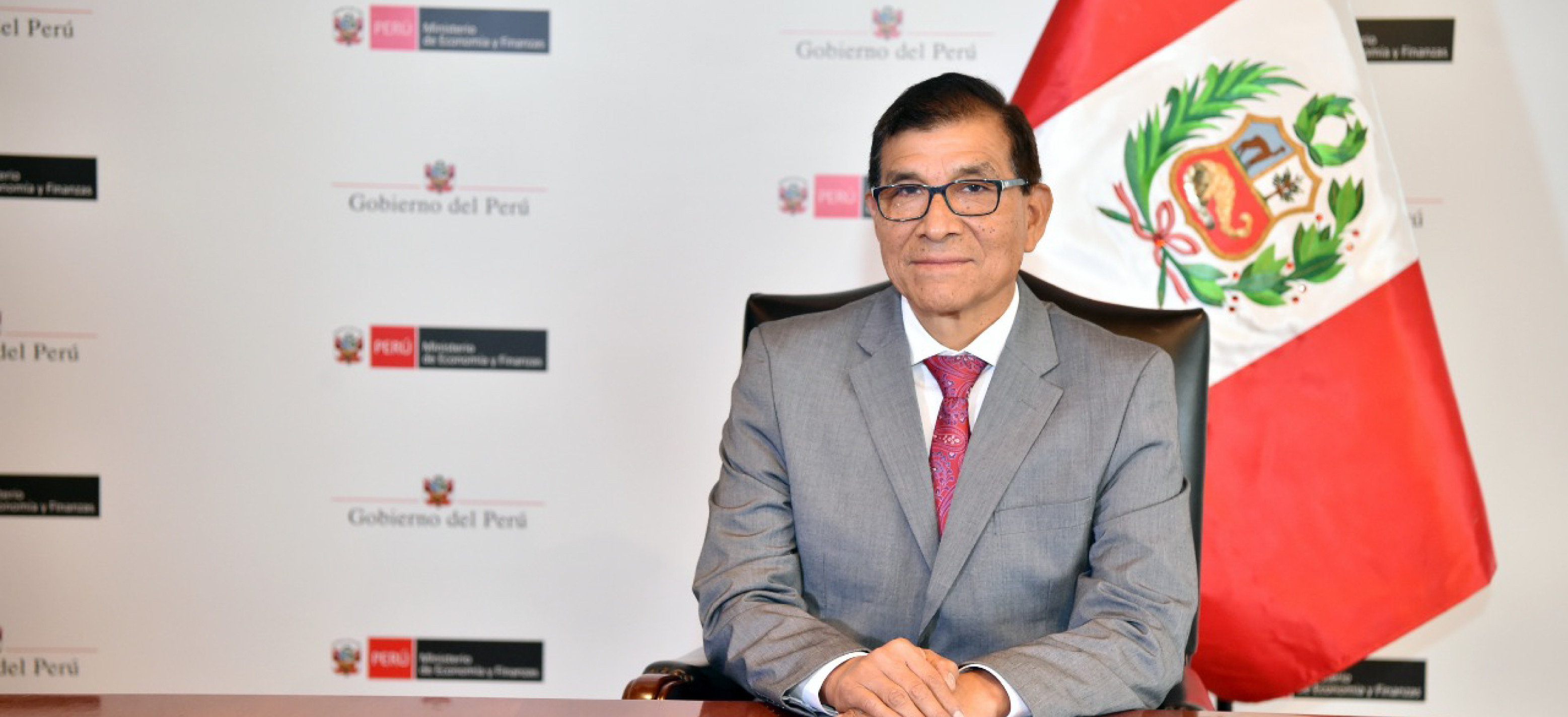
- This was stated by Juan Pichihua, Vice Minister of Economy, who participated in the conference program Road to PERUMIN.
Juan Pichihua, Vice Minister of Economy, stated that the prices of metals, such as gold and copper, remained at high levels, despite the fact that the economy was affected at the beginning of the year due to the social protests in the south, following the coup d'état carried out by former president Pedro Castillo.
"This conflict meant an economic slowdown of some 3 billion soles," he said during his presentation at Road to PERUMIN, an event organized by the Peruvian Institute of Mining Engineers.
However, Pichihua said that good news for the country is the entry of the Quellaveco mine, located in Moquegua, which will consolidate Peru as the second largest copper producer in the world, after the increase in production that will contribute 0.7 % to GDP growth.
This 2023 will be Quellaveco's first full year of commercial operation, with production of 300,000 fine metric tons (FMT) per year. This mine operated by Anglo American started operations in September 2022.
Cessation of Protests
To date, social protests have decreased considerably and no longer limit the development of economic activities. No roads have been blocked by villagers.
According to Minem, all mining activities are developing normally and, according to Mincetur, the Easter holiday generated an economic impact of US$ 157 million.
In addition, electricity production, an indicator that is highly linked to the mining sector, has been recovering since March, with the start-up of Quellaveco.
"According to the BCR, the expectations of economic agents continue to improve, showing positive indicators and expectations, as well as support in consulting, which generates greater investment and hiring confidence," he added.
In April, the signing and ratification of mining contracts were announced, as in the case of La Granja, with an investment of US$ 5 billion, which will jointly finance the costs of the feasibility study and development of the project, and Reposición Antamina, with an investment of US$ 2 billion.
On the other hand, Minem will evaluate the lithium exploration permits to Macusani Yellowcake for Falchani, which will invest US$ 587 million, and Lote 95 of PetroTal, which will invest US$ 125 million in the development of new wells, social investment and infrastructure.
Pichihua pointed out that Peru stands out in the world ranking of mining production and reserves. It is the second largest producer of zinc and copper, and ranks first in silver reserves, and third in copper and molybdenum reserves.
"We have a significant portfolio of mining projects in different stages of development. Of a total of 47, 24 projects are in the pre-feasibility and conceptual stage, 14 projects in the feasibility stage, 4 projects in detailed engineering and 8 projects under construction, totaling an investment of US$ 53.7 billion," he explained.
Peru also has 63 exploration projects for US$ 586 million. Arequipa, Ayacucho, Ancash and Cajamarca are among the regions with the highest investment in the exploration portfolio, with 8, 8, 6 and 4 projects, respectively.
Finally, Pichihua remarked that Peru continues to move forward with the progressive closing of social and productive gaps in mining areas through the Works for Taxes mechanism. It is estimated that 514 works will be carried out for an amount of S/. 6.7 billion, mainly related to the transportation, education and health sectors.