
 ES
ES
Arequipa, OCTOBER 2 2023 The Number of Companies with Short-Term Emissions Reduction Goals Has Increased Tenfold Since 2020
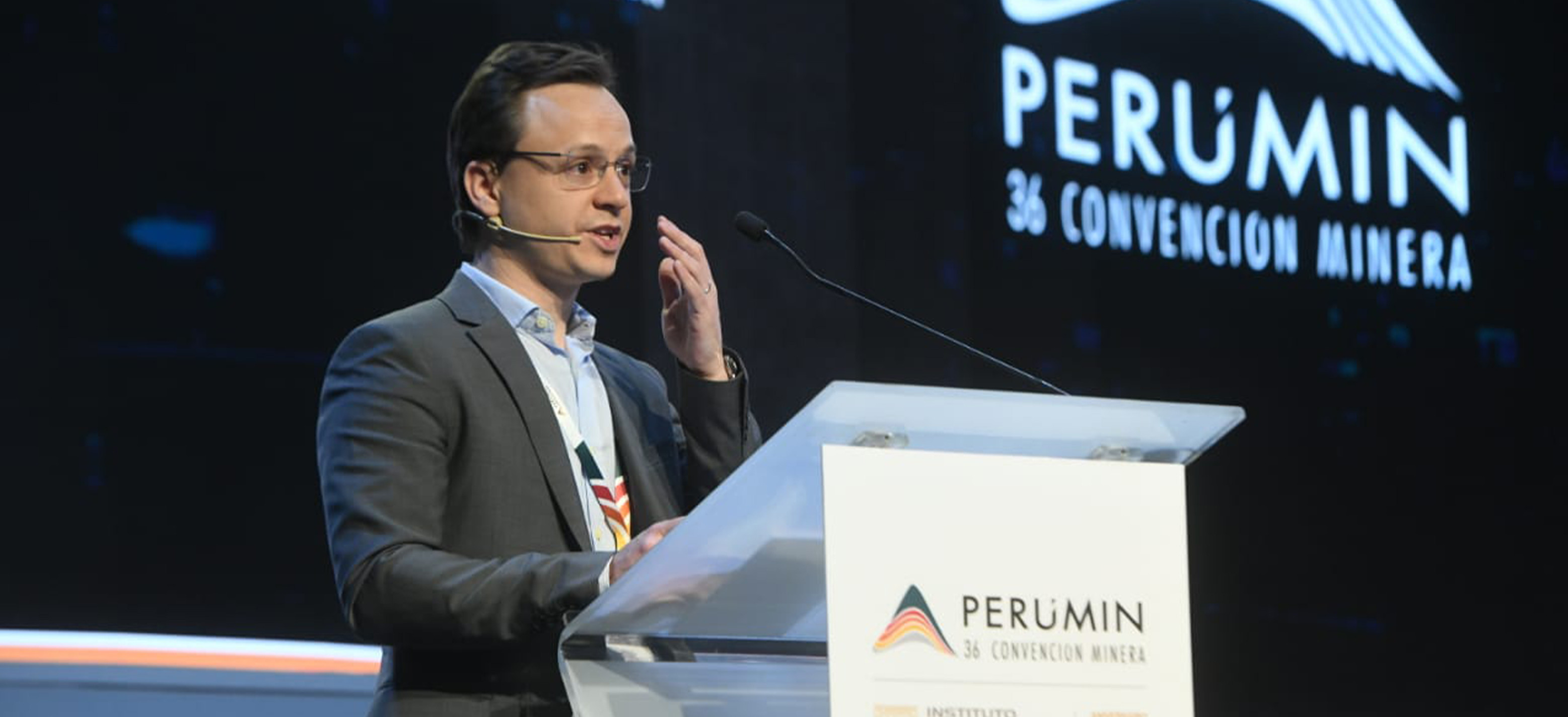
- Companies that embrace sustainability can reduce regulatory risk and become more attractive to applicants, stated Bruno Mourão, Managing Director & Partner at the Boston Consulting Group.
This year, one of the most relevant topics at PERUMIN 36, the leading mining convention in Latin America and the world, is sustainability and environmental responsibility in the mining sector.
One of the speakers who addressed this issue was Bruno Mourão, Managing Director & Partner at the Boston Consulting Group (BCG). In his presentation entitled “Climate Change: From Promise to Action,” Mourão stressed that mining companies that consider climate change and sustainability (C&S) could benefit in several ways: they would be more attractive to applicants (40% of millennials look at C&S when choosing a job), they would have higher profitability (a margin premium of 2-5 percentage points), they could better manage and reduce regulatory risk, they would have lower capital costs, better access to financing, access to new business opportunities, and a higher valuation in the market.
Mourão also said that all indicators show that we are on the wrong track and are likely to exceed 1.5°C by 2030. Therefore, the mining sector needs to take action for the good of the planet, people and their livelihoods.
Later in his presentation, however, the BCG spokesperson highlighted both good and bad news. The good news is that mining companies are committing to change. In fact, he revealed that the total number of companies setting short-term emissions reduction targets has increased tenfold since 2020. But the bad news is that the necessary change is being delayed. He noted that two-thirds of the clients of the materials and processes industries (MPI) are lagging in decarbonization. He also emphasized that implementing climate change and sustainability processes is particularly challenging for MPI companies. This is because they are often located in remote areas, and their sites present numerous C&S issues, among other challenges.
As a result of these findings, BCG interviewed over 45 sustainability representatives from various sectors (mining, construction materials, chemicals, metals, and paper) to understand the challenges and best practices in operationalizing C&S.
They found that the main challenges in implementing C&S strategies are the quality, collection, and use of C&S data (29%); lack of C&S skills and knowledge (25%); translation of C&S strategy into value (23%); employee commitment and involvement (23%); and insufficient full-time commitment to drive implementation (17%).
Subsequently, he mentioned that more advanced materials and processes companies accelerate their C&S processes in six ways: 1) Understanding and demonstrating the business case for sustainability. 2) Establishing working groups to jointly create objectives and solutions. 3) Integrating sustainability into functions and responsibilities. 4) Proactively identifying and addressing talent and skills imbalances. 5) Treating C&S data on par with financial data. 6) Integrating C&S logic into OPEX and CAPEX decision processes.
He concluded by reminding the attendees that integrating sustainability into operations requires adapting the operational model and that leadership is essential to make this change possible.